THE RESULTS OF THE STUDY WILL INFORM GOVERNMENT’S PLANS FOR REDEVELOPMENT OF THE AIRPORTS FUNDED BY THE WORLD BANK.
 Climate change poses a risk to the future of air transport and tourism in Saint Lucia. Their low elevation and proximity to the sea make the Hewanorra International Airport and the George F.L. Charles Airport particularly vulnerable to climate change-related hazards, including more intense hurricanes packing heavier rainfall and sea level rise which will amplify the effect of storm surge. The closure of both airports due to flooding during Hurricane Tomas and the 2013 Christmas Eve Trough provide a preview of the serious social and economic consequences at play.
Consequently, the Disaster Vulnerability Reduction Project (DVRP), commissioned a Comprehensive Flood Protection Study of the Hewanorra International Airport and its environs and the George F.L. Charles Airport and its environs using the leading global engineering firm, Arcadis, Canada. The study used a range of models to examine flood risk to both airports under various intensity rainfall events, ranging from the type of event one may expect in the average year to less frequent, more extreme events anticipated every 100 years on average. The flood modelling also considered coastal flooding caused by storm surge and wave runup during hurricanes or other high-surge events. The results of the study show not only how the airports may be flooded under the various scenarios to 2060, but how that would affect the airport’s infrastructure and systems and ultimately its operations and functionality.
The results of the study will inform Government’s wider plans for redevelopment of the airports funded by the World Bank. The project will integrate the recommended mitigation measures to protect both airports and ensure that operations can continue after significant flood events.
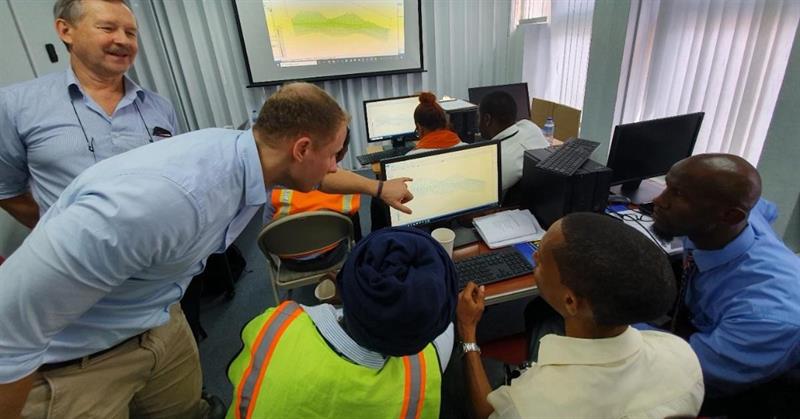
All data generated under the study belongs to the Saint Lucia Air and Seaports Authority (SLASPA) and following Arcadis’ presentation of findings, training was delivered on the modelling software used to conduct the study. The training was designed to equip technical staff with the knowledge to consistently update the models as more refined or new data becomes available to best protect the airports over time.
Gijs van Banning (Lead Engineer of Arcadis Canada) and Jos van der Baan (Coastal Engineer of Arcadis Canada) delivered the training at the SLASPA Training Room in February, 2020. Trainees were drawn from SLASPA, the Department of Infrastructure, Ports and Energy, and the Water Resources Management Agency (WRMA).