MONITORING IS KEY TO DETECTING ANY UNUSUAL OR UNEXPECTED CHANGES.
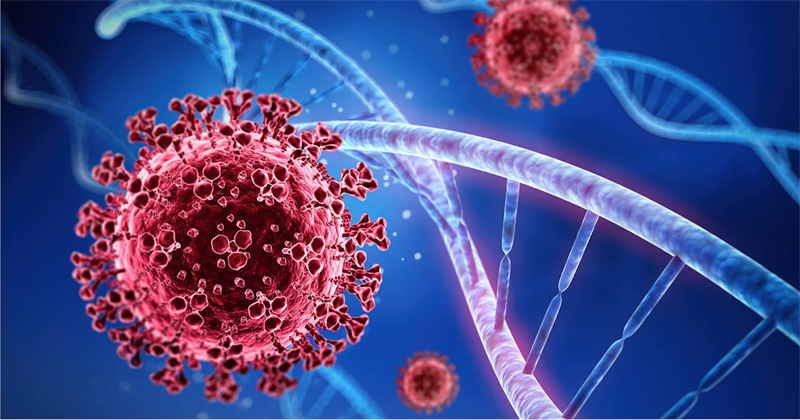 Variants of the SARS-CoV-2 virus that causes COVID-19 are to be expected, but genomic surveillance in the Americas should continue to detect any unusual or unexpected increase in cases, increase in lethality or change in clinical patterns that could affect control measures including vaccines, a group of experts said.
During a Webinar for journalists, experts from the Pan American Health Organization (PAHO) and the Oswaldo Cruz Foundation (Fiocruz) discussed key questions raised by the variants, including their impact on transmissibility, the severity of COVID-19, and the effectiveness of vaccines against them.
Mutations are expected in the virus evolution and adaptation process, said Dr. Jairo Mendez Rico, PAHO’s advisor on emerging viral diseases. When these variants have a potential impact or risk for public health, they are considered variants of concern (VOC). The four variants of concern that have been detected in the Americas include those that originated in the United Kingdom (B 1.1.7), South Africa (B.1.351), Brazil (P.1), and India (B.1.617).
So far, 37 countries and territories have confirmed the presence of one or more of the four variants of concern. Variant B.1.1.7 was confirmed in 34 countries; variant B.1.351 in 17, variant P.1 in 21 countries, and variant B.1.617 in eight countries.
The occurrence of mutations is a natural and expected event within the evolutionary process of the virus. These changes could lead to advantages for the virus to achieve its “objectives,” which are to have a better capacity to enter the cells and then to replicate, and to try to escape the immune response, either natural or vaccine-mediated, Mendez said.
However, Mendez said, “Although some (variants of concern) have demonstrated enhanced capacity to replicate and transmit, they are not more aggressive or severe.” He pointed out that from an evolutionary perspective, it is not in the virus’s interest to kill its host. He also said that “so far, there is not sufficient evidence to infer that currently available vaccines do not work with these variants.”
The higher the transmission level within populations, the more likely it is that viral mutations will occur. The experts agreed that slowing or halting transmission is the only way to avoid the appearance of new variants.
They recommend maintaining all public health measures where the virus is circulating, regardless of the variants. These include using face masks, maintaining physical distancing from others, avoiding crowded, closed spaces, opening windows for ventilation, hand hygiene, and getting vaccinated when vaccines become available. They also recommend strengthening both epidemiological and genomic surveillance to reduce the spread of the virus and possible mutations.